AmeriHealth Caritas Ohio Account Executives (AE) conduct routine site visits to ensure providers are well-connected with their assigned AE. Following the site visit, AmeriHealth Caritas Family of Companies corporate team will email a brief survey regarding your experience.
We kindly ask that you take a few moments to complete and return the survey. Your feedback is valuable and helps us to continue to improve support and services.
As always, we appreciate your partnership.
As a contracted provider with AmeriHealth Caritas Ohio, it’s essential to understand the rules and responsibilities around balance billing to ensure compliance and protect our Medicaid members.
🚫 When billing a Medicaid member is not permitted
Providers may not bill Medicaid recipients when a claim is denied due to:
Unacceptable or untimely claim submission
Failure to obtain prior authorization
Retroactive determination by a Peer Review Organization (PRO) that the service was not medically necessary
These denials do not transfer financial responsibility to the member.
✅ When billing may be permitted
A provider may bill a Medicaid recipient in lieu of submitting a claim to the Ohio Department of Medicaid (ODM) only if all of the following conditions are met:
The provider informs the member that the service is covered by Medicaid and that other providers may offer it at no cost.
The provider notifies the member in writing—before each date of service—that they will not submit a claim to ODM.
The member signs a written agreement acknowledging financial responsibility before the service is rendered.
The service is not a prescription for a controlled substance as defined in Ohio Revised Code §3719.01.
Additionally, non-covered services (including those denied for lack of prior authorization) may be billed to the member only if the written notification and agreement steps above are followed.
💡 Important reminder
Under the Social Security Act, all payments from AmeriHealth Caritas Ohio to participating providers must be accepted as payment in full. Members may not be balance billed for medically necessary covered services under any circumstance.
📌 What this means for you
Balance billing violations can result in compliance actions and member grievances. Please ensure your billing practices align with ODM and AmeriHealth Caritas Ohio policies. If you have questions, contact your Provider Relations representative.
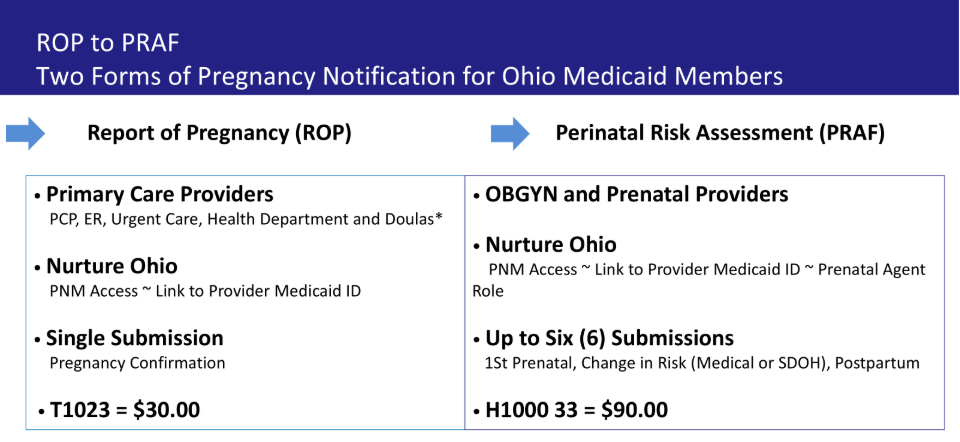
Updated Billing Information on the Report of Pregnancy (ROP) and Perinatal Risk Assessment Form (PRAF)
Comprehensive Payment Systems Errors Report
The Claims Payment Systemic Errors (CPSE) report is updated and posted monthly with a list of resolved issues.
Electronic Claims Submission
Providers can choose the submission option that works for them. It can be any approved clearinghouse or direct to ODM. Preferred options are:
Availity (subscription)
Change Healthcare (no cost)
Electronic Funds Transfer
AmeriHealth Caritas Ohio has contracted with Change Healthcare and ECHO® Health, Inc., to administer electronic funds transfer (EFT) payments. There are no fees for single payer agreements to receive a direct payment from AmeriHealth Caritas Ohio via EFT or to receive an electronic remittance advice (ERA). Click to learn how to enroll, the payment schedule, and more.
Best Practices to Ensure Accurate Payment and Directory Information
ODM can take up to 14 business days to approve and send changes
If you are having difficulties getting your claims to AmeriHealth Caritas Ohio through the Fiscal Intermediary (FI), contact ODM's Integrated Helpdesk at IHD@Medicaid.ohio.gov or 1-800-686-1516.
Questions About Reimbursement or Payment Policies?
Click the appropriate link below for more detailed information.
If a provider disagrees with the outcome of a claim, the first step should always be to submit a claim dispute.
Provider disputes
Provider claim disputes are any provider inquiries or requests for reconsiderations, ranging from general questions about a claim to a provider disagreeing with a claim denial. Provider Dispute Submission Form (PDF)
A dispute can be submitted using any of the following methods:
Mail the form with your supporting documentation to:
AmeriHealth Caritas Ohio
Attn: Provider Claim Inquiry
P.O. Box 7400
London, KY 40742
NaviNet
Overpayment Recovery Enhancement
NaviNet now offers the chance to review, approve or dispute claims overpayments and submit supporting documentation electronically in real-time. This functionality allows providers a more efficient way to respond to overpayment letters. It will help reduce the need to mail written correspondence and minimize response times.
Forms and Dashboards > Overpayments
Did You Know?
You can submit prior authorization requests electronically on our secure provider portal NaviNet, and in some instances receive auto-approval. Turnaround times are faster when using NaviNet.
In the event you are unable to request a prior authorization, you can request a retro authorization if there is no claim on file. If no claim is on file, UM will review retro requests. Please contact your dedicated Account Executive with questions.
NaviNet Claim Disputes Status Check Update
AmeriHealth Caritas Ohio and NantHealth | NaviNet expanded the functionality for the submission of disputes regarding claim issues and supporting documentation to include the capability of viewing the status of the dispute and a copy of the determination letter. Click to read the entire notice.
New to NaviNet?
If you do not have access to the NaviNet provider portal, please visit: https://register.navinet.net/ to sign up. When registering for NaviNet, please have the following information ready to be entered into the online registration form:
Office name
Address
Phone number
TIN
You will also be asked to attach one of the following documents for verification:
Certificate of Good Standing
Sole Proprietor SS-4
IRS 147C Letter
If you have questions, please contact your Provider Account Executive or the Provider Services department at 1-833-644-6001.
Prior authorizations
Helpful Prior Authorization Information
The most up-to-date list of services requiring prior authorization is on our website. The Plan’s Utilization Management (UM) department hours of operation are 8:30 a.m. to 5 p.m. ET, Monday through Friday except for holidays. The UM department can be reached at:
For prior authorizations after hours, weekends and holidays, call Member Services at 1-833-764-7700 (TTY 1-833-889-6446),24 hours a day, seven days a week.
AmeriHealth Caritas Ohio offers our providers access to our Medical Authorizations portal for electronic authorization inquiries and submission. The portal is accessed through NaviNet and located on the Workflows menu.
In addition to submitting and inquiring on existing authorizations, you will also be able to:
Verify if No Authorization is Required
Receive Auto Approvals, in some circumstances
Submit Amended Authorization
Attach supplemental documentation
Sign up for in-app status change notifications directly from the health plan
Access a multi-payer Authorization log
Submit inpatient concurrent reviews online if you have Health Information Exchange (HIE) capabilities (fax is no longer required)
Review inpatient admission notifications and provide supporting clinical documentation
To find out if a service needs prior authorization, type a Current Procedural Terminology (CPT) code or a Healthcare Common Procedure Coding System (HCPCS) code into the tool.
The tool will tell you if that service needs prior authorization.
Important notice
This tool provides general information for outpatient services performed by a participating provider. Prior authorization requirements also apply to secondary coverage.
The following services always require prior authorization:
If you have questions about this tool, a service, or to request a prior authorization, contact Utilization Management at 1-833-735-7700.
Submit All Medical Pharmacy Prior Authorizations (PA) to PerformRx
Prior authorization requests for prescriber administered medications should be submitted to PerformRx via fax. See our website for more information and the form.
Behavioral Health
CEU Opportunities Sign up to receive notifications of FREE CEU trainings provided by AmeriHealth Caritas of Ohio.
Submitting Prior Authorization (PA) Requests for Behavioral Health Services
See the tip sheet for guidance on submitting PAs for behavioral health service requests.
Resources
PCP Change Form
Do you have a patient whose Member ID card does not have you listed as their assigned PCP? You can use the PCP change form to request a change to a member's PCP. Access the form here.
AmeriHealth Caritas Ohio, in collaboration with Project ECHO, is offering a free case-based learning model for practitioners:
Engage, Empower, Treat: A Behavioral Health ECHO Learning Series.
Date
Topic
July 9
Start the Conversation: Assessment and Intervention for Alcohol Use
If you are attending any of the conferences below, we encourage you to stop by our booth to connect with our Account Executive team and pick up some AmeriHealth Caritas Ohio branded items.
Date
Organization
Event
Location
Thursday, August 6
Ohio Rural Health Association
2026 Ohio Rural Health Conference
OSU Wooster Campus
Virtual Provider Orientation
AmeriHealth Caritas Ohio invites you and your staff to join us for a virtual New Provider Orientation session.
AmeriHealth Caritas Ohio is committed to promoting education and awareness of culturally and linguistically appropriate services (CLAS) and to combating the effects of low health literacy on the health status of our members.
Employee Spotlight
Tell us a little bit about where you’re from and where you went to school.I was born and raised in Lima and graduated from Lima Senior High School. I attended college at James A. Rhodes State College where I earned a degree in Applied Sciences and achieved state licensure as a Physical Therapist Assistant, which I still hold and utilize outside of my role at AmeriHealth Caritas Ohio.
Everyone at AmeriHealth Caritas Ohio has a story about why they joined the team. What’s yours?When researching and learning about AmeriHealth Caritas as an overall company, I was immediately drawn in by the organizational mission of improving access to quality care, improving the health statuses of entire communities, empowering the poor and disadvantaged, and advocating for those unable to speak for themselves. This was something I felt strongly about and had become increasingly important to me during my time working as a full-time therapist as a lot of the facilities I managed specialized in medically complex Medicaid clientele.
What drew you to this profession?
It may sound cliché, but one of the things that brings me the greatest amount of joy in life is helping people in any way possible. Working in healthcare, and AmeriHealth Caritas specifically, allows me to do just that in a multitude of ways. Whether that is through direct face-to-face interaction, engaging with service providers who have hands-on contact with our members, or behind the scenes working with our various internal teams to problem solve and look for improvement opportunities. I feel a sense of accomplishment and pride in the work that we do knowing the amount of individuals we can impact and make a difference in their lives.
What do you like to do in your free time?
Free time for me is usually spent with my family. We make it a point to be active
and outside, frequenting parks, playgrounds, walking trails, and taking bike rides. On a more personal level, I am a big sports fan and can watch about anything sports related. If I have free time in the evening it is usually spent watching whatever sport is currently in season. I also coach youth basketball and soccer at various points throughout the year.
If you could have dinner with anyone in the world, dead or alive, who would it be? Why? Dolly Parton, without question. Her level of charitable work on a large scale as well as contributions to the community she grew up in should be viewed as the gold standard for all celebrities. Her Imagination Library alone has given away over 300 million books to date and that number grows every year. My family regularly vacations close to the region where she grew up, Sevierville, TN, and I think it would be a great conversation hearing about her journey starting from a one room log cabin with 11 siblings, no running water or electricity, to where she is now.
What are 2 apps on your phone you CANNOT live without?YouTube and The Weather Channel App.
Any interesting facts about yourself that you’d like to share? I am proud to say I have had the privilege of helping photograph around 25 weddings over the last few years as a 2nd shooter for my wife’s photography business! I am also a big music lover and enjoy songs from artists representing pretty much every main genre I can think of. I play the drums, so part of the joy of music for me is not only the song itself but thinking about how fun playing along to it would be (or is).
Local image paste has been disabled. Local images have been removed from pasted content.
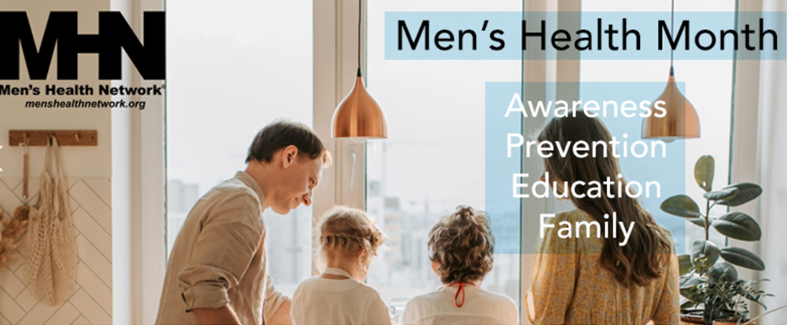
Men’s Health Week
The purpose of Men’s Health Week (MHW) is to heighten the awareness of preventable health problems and encourage early detection and treatment of disease among men and boys.
Key Focus Areas
MHW is celebrated June 15-21 and focuses on the critical areas impacting men and boys across their lifespans. These priorities reflect where education, empathetic connection, and shared advocacy can drive meaningful improvements in health outcomes.
Prostate & Testicular Cancer Awareness: Promoting early detection, education, and open conversations to improve survival & long-term health outcomes.
Men’s Mental Health & Emotional Well-Being: Encouraging connection, reducing stigma, & supporting approaches that resonate with men while recognizing the vital role of families & care partners.
Preventive & Employer-Led Health Engagement: Advancing workplace and community initiatives that encourage screenings, healthy behaviors, and proactive healthcare participation.
Caregiving, Fatherhood, & Family Health: Recognizing men as care partners and caregivers and reinforcing the importance of shared responsibility in strengthening family & community health.
Social determinants of health and low birth weight: What providers need to know Low birth weight is a significant health concern Low birth weight (LBW), defined as a neonatal weight of less than 5 pounds, 8 ounces, affects 1 in 12 infants (8.5%) in the United States and is widely recognized as a public health concern.1 Infants with LBW are considered to be at elevated risk for infant mortality, developmental delays, and long-term health complications. Common medical concerns associated with LBW include the need for specialized intensive care due to conditions such as respiratory distress syndrome, intraventricular hemorrhage (IVH), patent ductus arteriosus, necrotizing enterocolitis, retinopathy of prematurity, jaundice, and infections. These babies may also face other health conditions later in life which may include diabetes, heart disease, high blood pressure, intellectual and/or developmental disabilities, metabolic syndrome, or obesity.
How SDOH can affect birth weight While the clinical complications of LBW are well understood, what is often less recognized is the critical role that social determinants of health (SDOH) play in driving these outcomes. Providers are uniquely positioned to identify and address these factors during pregnancy.
Social determinants of health, as defined by the World Health Organization, comprise the circumstances in which individuals “are born, grow, live, work, and age.”2 Pregnant individuals are especially vulnerable to adverse outcomes related to unmet basic needs within these domains. When basic social, economic, and environmental needs remain unfulfilled, the likelihood of LBW increases:3
Access to basic needs: Lack of stable housing, nutritious food, safe water, and reliable transportation impacts maternal health and prenatal care.
Stress and mental health: Maternal stress, domestic violence, language barriers, and limited social support increase biological and behavioral risks.
Environmental exposures: Pollution, unsafe neighborhoods, and poor working conditions contribute to adverse birth outcomes.
Structural inequities: Limited access to high-quality, culturally responsive care prolongs disparities, especially among minority and underserved populations.
Ways that providers can intervene Clinical interventions alone cannot address the multifactorial origins of low birth weight. However, through comprehensive prenatal care, providers can play a pivotal role in mitigating the impact of SDOH on birth weight:4
Screening: Systematically incorporate SDOH screening into prenatal visits to identify needs related to housing, nutrition, transportation, and mental health at an early stage.
Connection: Establish partnerships with community organizations to link patients to resources (e.g., food assistance, housing support, transportation services, counseling).
Education: Offer targeted provide education on nutrition, stress management, and health literacy to empower patients through pregnancy.
Advocacy: Champion policy and program changes that expand access to maternal health services, reduce inequities, and improve long-term outcomes.
Benefits of addressing SDOH Delivering culturally competent care — including language access, respectful communication, and awareness of systemic barriers — empowers pregnant individuals to be more open about their actual needs and stay on top of getting the care they need throughout their pregnancy. Building trust encourages pregnant individuals to be proactive with their conversations about risks and supports better care coordination.
Low birth weight is not only a clinical complexity, but it also has roots in the social, economic, and environmental conditions that are affecting pregnant individuals. Through collaboration and integrating SDOH into clinical care, health care providers and community partners can help reduce disparities in birth outcomes, improve maternal health and infant survival, and strengthen families and communities in the long term.
GuillerminaGirardi, et al., “Social determinants of health in pregnant individuals from underrepresented, understudied, and underreported populations in the United States,” IntJ Equity Health, Vol. 22, No. 186, September 6, 2023, https://doi.org/10.1186/s12939-023-01963-x, accessed February 13, 2026.
“Social Determinants of Health: Improving Maternal and Infant Health requires more than clinical care,” Progeny Health, https://info.progenyhealth.com/sdoh, accessed February 13, 2026.