| |
Provider Partnerships - April 2026
A newsletter from AmeriHealth Caritas Ohio to better support those who care for our members. |
|
|
|
|
| |
Access to care
AmeriHealth Caritas Ohio providers must meet access standard guidelines as outlined in this publication to help ensure that Plan members have timely access to care.
AmeriHealth Caritas Ohio endorses and promotes comprehensive and consistent access standards for members to assure member accessibility to healthcare services. The Plan establishes mechanisms for measuring compliance with existing standards and identifies opportunities for the implementation of interventions for improving accessibility to healthcare services for members.
Providers are required to offer hours of operation that are no less than the hours of operation offered to patients with commercial insurance or comparable to the hours of operation offered to Medicaid Fee for Service patients. Appointment scheduling and wait times for members should comply with the access standards. The standards apply to healthcare services and medical and behavioral health providers.
AmeriHealth Caritas Ohio monitors the following access standards on an annual basis per AmeriHealth Caritas Ohio guidelines. If a provider becomes unable to meet these standards, he/she must immediately advise his/her Provider Network Account Executive or the Provider Services department at 1-833-644-6001.
The details of these requirements can be found on pages 34, 35 and 36 of the provider manual.
|
|
Timely reminder
AmeriHealth Caritas Ohio requires that all provider claims, resubmissions, corrected claims, and disputes be submitted within established timely filing limits. Claims or claim-related submissions received outside of these timeframes will be denied for Timely Filing (TFO) and are not eligible for reconsideration unless otherwise required by contract or regulation. |
|
|---|
|
|
Guideline
|
Definition
|
Time Frame
|
Exceptions /Limitations
|
|
Rejected Claims
|
Are defined as claims with invalid or required missing data elements, such as the provider tax identification number, Provider Medicaid ID number, member ID number, that are returned to the designated EDI1 source without registration in the claim processing system.
|
Par/Non Par Outpatient: 365 days from the begin date of service
Par/Non Par Inpatient: 365 days from the discharge date of service
|
COB: 180 days from the date of the EOB
EXCEPTIONS:
Claims denied by the primary for Timely Filing will stay denied TFO
|
|
Initial Claim
|
A first-time submission on a UB04 or CMS1500 for services rendered to a member
|
Par/Non Par Outpatient: 365 days from the begin date of service
Par/Non Par Inpatient: 365 days from the discharge date of service
|
COB: 180 days from the date of the EOB
EXCEPTIONS:
Claims denied by the primary for Timely Filing will stay denied TFO
|
|
Resubmission of a Claim
|
A "Resubmission" is defined as a claim originally denied/rejected because of missing documentation, incorrect coding, etc., which is now being resubmitted with the required information.
|
Par/Non Par Outpatient: 365 days from the begin date of service
Par/Non Par Inpatient: 365 days from the discharge date of service
|
Recovered claim: 30 days from the date of the recovery
COB: 180 days from the date of the EOB
EXCEPTIONS:
Claims denied by the primary for Timely Filing will stay denied TFO
|
|
Corrected Claims
|
A corrected claim is a replacement of a previously billed claim that requires a revision to coding, service dates, billed amounts or member information. Must Follow corrected claims billing requirements (Frequency code of 7 and Original Claim ID in Box 22 of the CMS 1500 and Box 64 (A,B,C) of the UB04)
|
Par/Non Par Outpatient: 180 from the date of denial/recovery or 365 days from the begin date of service
Par/Non Par Inpatient: 180 from the date of denial/recovery or 365 days from the end date of service
|
Recovered claim: 30 days from the date of the recovery
COB: 180 days from the date of the EOB
EXCEPTIONS:
Claims denied by the primary for Timely Filing will stay denied TFO
|
|
Dispute
|
A provider’s disagreement with the way a claim has processed/denied.
|
Par/Non Par Outpatient: 365 days from the begin date of service or 60 days from the date of denial/resolution
Par/Non Par Inpatient: 365 days from the discharge date of service or 60 days from the date of denial/resolution
|
|
|
Recovery Dispute
|
A provider’s disagreement with a claim recovery project (AmeriHealth Caritas Ohio has sent a letter).
|
30 days from the date of the notification
|
Any provisions, exclusions or limitations outlined within contractual language
|
|
Account Executive Escalations
|
A provider contacting their account executive to escalate mishandled disputes/claims.
|
60 days from the date of denial, payment, or determination letter
|
|
|
|
|---|
|
Claim reconsiderations with dates of service (DOS) beyond 730 days cannot be considered for review for any reason. |
|
|---|
|
Important reminder regarding automated calls
AmeriHealth Caritas Ohio does not disclose claim information to automated or AI generated callers. Providers calling about denied claims and other claim inquiries, must contact us using a live representative. To receive assistance, AmeriHealth Caritas Ohio Provider Services can be reached at 1-833-644-6001.
|
|
|
Comprehensive Payment Systems Errors Report
The Claims Payment Systemic Errors (CPSE) report is updated and posted monthly with a list of resolved issues.
Electronic claims submission
Providers can choose the submission option that works for them. It can be any approved clearinghouse or direct to ODM. Preferred options are:
- Availity (subscription)
- Change Healthcare (no cost)
Electronic funds transfer
AmeriHealth Caritas Ohio has contracted with Change Healthcare and ECHO® Health, Inc., to administer electronic funds transfer (EFT) payments. There are no fees for single payer agreements to receive a direct payment from AmeriHealth Caritas Ohio via EFT or to receive an electronic remittance advice (ERA). Click to learn how to enroll, the payment schedule, and more.
Dispute or appeal?
If a provider disagrees with the outcome of a claim, the first step should always be to submit a claim dispute.
Provider disputes
Provider claim disputes are any provider inquiries or requests for reconsiderations, ranging from general questions about a claim to a provider disagreeing with a claim denial. Provider Dispute Submission Form (PDF)
A dispute can be submitted using any of the following methods:
- NaviNet (recommended method):
- NaviNet > Forms and Dashboards > Provider Dispute Submission Form
- The turnaround time is 15 days for disputes.
- Mail the form with your supporting documentation to:
- AmeriHealth Caritas Ohio
- Attn: Provider Claim Inquiry
- P.O. Box 7126
- London, KY 40742
- Phone: 1-833-644-6001. Select the prompts for the correct department and then select the prompt for claim issues.
- Fax: 1-833-216-2272
Provider appeals
Providers may file an appeal on a denied pre-service within 30 days of the notice of Adverse Benefit Determination (ABD).Provider Appeal Form (PDF).
- Fax: 1-833-564-1329
- Mail the form with your supporting documentation to:
- AmeriHealth Caritas Ohio
- Attn: Provider Claim Inquiry
- P.O. Box 7400
- London, KY 40742
Best practices to ensure accurate payment and directory information
Questions about reimbursement or payment policies?
Click the appropriate link below for more detailed information.
|
|
|---|
|
If you do not have access to the NaviNet provider portal, please visit: https://register.navinet.net/ to sign up. When registering for NaviNet, please have the following information ready to be entered into the online registration form:
- Office name
- Address
- Phone number
- TIN
You will also be asked to attach one of the following documents for verification:
- Certificate of Good Standing
- Sole Proprietor SS-4
- IRS 147C Letter
If you have questions, please contact your Provider Account Executive or the Provider Services department at 1-833-644-6001.
NaviNet® Disputes Status Enhancement
This enhancement is designed to streamline your workflow by eliminating the need to call the health plan to check whether a member has used their vision benefits for the current benefit year prior to scheduling their eye exam.
Providers can now view the status and a copy of the determination letter for previously submitted disputes via the NaviNet provider portal by accessing Forms and Dashboards and selecting the Check Dispute Status link.
Search by one of the following data elements:
- Claim ID
- Member's ID
- Submission Date Range - Begin Date and End Date
Providers will be able to view 18 months of status history based on the dispute receive date.
The search will return one of the following statuses:
In Progress, Overturned, Upheld or Voided and will include the date the determination letter was uploaded into the system. A copy of the determination letter will be available under Practice Documents.
This enhancement is designed to streamline your workflow by eliminating the need to:
- Call the health plan to obtain the status of your request.
- Wait to receive the determination letter by mail.
Overpayment recovery enhancement
- NaviNet now offers the chance to review, approve or dispute claims overpayments and submit supporting documentation electronically in real-time. This functionality allows providers a more efficient way to respond to overpayment letters. It will help reduce the need to mail written correspondence and minimize response times.
- Forms and Dashboards > Overpayments
NaviNet® Vision Accumulator Enhancement
Vision providers can now view whether a member has used their vision benefits for the current benefit year by accessing the Vision Accumulator within the NaviNet Provider Portal.
Once logged into NaviNet, providers will select the
Eligibility and Benefits Inquiry link under
Workflows for this Plan. Search by one of the following data elements:
- Member ID
- Member name and date of birth
The search will return the Eligibility and Benefits screen which will display a Patient Alert Details popup. The Patient Alert popup will include an option for Vision Accumulator. Selecting the Vision Accumulator link will open another screen which displays:
- Eye Exam Visit Count
- Frame and Lens, including Allowance, Used and Balance, (if applicable)
- Frame Visit Count
- Lens Visit Count
- Contact Lens Visit Count
Did you know?
- You can submit prior authorization requests electronically on our secure provider portal NaviNet, and in some instances receive auto-approval. Turnaround times are faster when using NaviNet.
- In the event you are unable to request a prior authorization, you can request a retro authorization if there is no claim on file. If no claim is on file, UM will review retro requests. Please contact your dedicated Account Executive with questions.
|
|
|---|
|
Helpful prior authorization information
The most up-to-date list of services requiring prior authorization is on our website. The Plan’s Utilization Management (UM) department hours of operation are 8:30 a.m. to 5:00 p.m. ET, Monday through Friday except for holidays. The UM department can be reached at:
- Utilization Management telephone: 1-833-735-7700
- Utilization Management prior authorization fax: 1-833-329-6411
For prior authorizations after hours, weekends and holidays, call Member Services at 1-833-764-7700 (TTY 1-833-889-6446), 24 hours a day, seven days a week.
AmeriHealth Caritas Ohio offers our providers access to our Medical Authorizations portal for electronic authorization inquiries and submission. The portal is accessed through NaviNet and located on the Workflows menu.
In addition to submitting and inquiring on existing authorizations, you will also be able to:
- Verify if No Authorization is Required
- Receive Auto Approvals, in some circumstances
- Submit Amended Authorization
- Attach supplemental documentation
- Sign up for in-app status change notifications directly from the health plan
- Access a multi-payer Authorization log
- Submit inpatient concurrent reviews online if you have Health Information Exchange (HIE) capabilities (fax is no longer required)
- Review inpatient admission notifications and provide supporting clinical documentation
|
|
|---|
|
Upcoming changes to eligibility for OhioRISE members
The Ohio Department of Medicaid intends to amend the OhioRISE eligibility and enrollment rule, 5160-59-02, so that OhioRISE enrollment becomes effective the first day of the calendar month in which eligibility is established. This change is intended to align with OhioRISE managed care program enrollment and to reduce manual retro-enrollments related to an inpatient behavioral health admission. The rule change is expected to take effect July 1.
Clarification regarding financial responsibility for behavioral health services delivered to children and youth is outlined in the OhioRISE Mixed Services Protocol (the "Protocol"). Managed care plans will remain responsible for CANS assessments completed prior to OhioRISE enrollment. The Protocol will be updated as necessary to support the rule change.
This change, which makes OhioRISE retro eligibility effective on the first day of the calendar month in which a member becomes eligible, may result in previously paid behavioral health claims being recouped so the claim can be resubmitted to the OhioRISE plan for processing.
CEU opportunities
Sign up to receive notifications of FREE CEU trainings provided by AmeriHealth Caritas of Ohio.
|
|
|

Submitting prior authorization (PA) requests for behavioral health services
See the tip sheet for guidance on submitting PAs for behavioral health service requests.
Billing reminder - rendering practitioners/affiliation
ODM requires that the rendering practitioner for behavioral health services be listed on claims submitted to Ohio Medicaid for payment. Their personal National Provider Identifier (NPI) must be reported in the rendering field on the claim for each service they provide. All rendering practitioners are required to have an NPI to render services to Medicaid enrollees AND they will be required to enroll in the Ohio Medicaid program and affiliate with their employing/contracting agency. Information about obtaining an NPI is available here. Once the rendering practitioner has obtained an NPI, they must enroll as a provider in the Ohio Medicaid Program via the Provider Network Management (PNM) portal. Click here for more details on this process.
|
|
|---|
|
Quality Counts – The HEDIS Brief
Our HEDIS Brief is a series of training videos about the Healthcare Effectiveness Data and Information Set (HEDIS). Each video is three minutes or less, offers a review of HEDIS essentials, gives you the tools you need to meet, document, and code HEDIS measures, and helps ensure quality care delivery for your patients.
HEDIS records request
Each year from January through April, AmeriHealth Caritas Ohio conducts medical record reviews for a small group of members whose claims data show missing information or possible care gaps. During this time, you may receive requests from PalmQuest for medical records needed to complete this review. Your support helps ensure accurate quality reporting and better outcomes for our members.
|
|
|
|
|---|
|
Free CEU opportunities from AmeriHealth Caritas Ohio
Engage, Empower, Treat: A Behavioral Health ECHO Learning Series (through July)
AmeriHealth Caritas Ohio, in collaboration with Project ECHO, is excited to launch an emerging case-based learning model for practitioners.
View the flyer for complete details.
For registration instructions, email: projectecho@amerihealthcaritas.com.
|
Date
|
Topic
|
|
May 14
|
Managing Behavioral Health Conditions During the Perinatal Period
|
|
June 11
|
Attention Deficit Hyperactivity Disorder (ADHD) in Adults
|
|
July 9
|
Start the Conversation: Assessment and Intervention for Alcohol Use
|
|
|
|---|
|
Additional free CEU opportunities
|
|
|---|
|
Virtual provider orientation
AmeriHealth Caritas Ohio invites you and your staff to join us for a virtual New Provider Orientation session.
Click here to see the calendar.
|
|
|
Cultural competency
AmeriHealth Caritas Ohio is committed to promoting education and awareness of culturally and linguistically appropriate services (CLAS) and to combating the effects of low health literacy on the health status of our members.
|
|
|---|
|
Tell us a little bit about where you’re from and where you went to school.
I was born, raised and still reside in Youngstown. I attended Youngstown State University, where I earned my Bachelor of Science in Public Health (BSPH).
Everyone at AmeriHealth Caritas Ohio has a story about why they joined the team. What’s yours?
I found myself displaced after being with another large MCO for almost twenty years. I was looking for something similar and terrified I wouldn’t find a position locally in my field. I came across a friend sharing AmeriHealth Caritas Ohio’s job posting for a position that was exactly what I had been doing. I did some research about the company and was so blown away at all the great work being done for the community and applied. The rest is history. I jumped in without skipping a beat, I feel like I have been here for years. My teammates, and all the staff, welcomed me with open arms and I am happy to work for a company that genuinely cares about the wellbeing of their members and offers support to help them achieve their best health.
What drew you to this profession?
Years ago, after working in numerous careers, I started working for a health insurance company and it sparked my interest in this field. After a healthcare scare in 2012, I decided to continue my education in this line of work because I wanted to be a part of advocating for others to be active in their own healthcare and take preventative measures to assure they live to their healthiest potential.
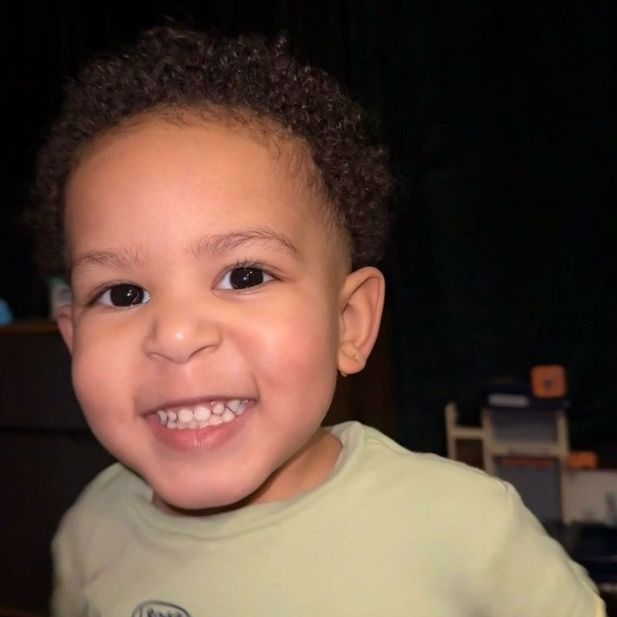
My Grandson Junie. He lights up my life!
|
|
|
What do you like to do in your free time?
I roller skate once a week. I’m known as "the lady with leopard skates!" I love to attend music concerts of all genres and comedy shows. But, most importantly, I love spending time with my grandson. I am a mom of two girls and finally I get to experience boy stuff!

I started skating again in 2021 and have made so many forever friendships. My skates are a great conversation starter!
If you could have dinner with anyone in the world, dead or alive, who would it be? Why?
I would choose Dolly Parton. I have loved her since I was a little girl - her music, her story of rising from poverty to stardom, and most notably her philanthropy aimed at helping others.
What are 2 apps on your phone you CANNOT live without?
The SNKRS app, for I have quite an obsession with sneakers. It keeps me up to date on any new releases and pairs that come out that I want but don’t NEED! The other app is Pinterest. I love looking up recipes to try and ideas for home improvement and decoration.
Any interesting facts about yourself that you’d like to share?
A fact about me that some would find surprising is I once worked for a traveling plumbing company
right out of high school. I was responsible for converting households with well water to the city water mains which included climbing under trailer homes in all weather conditions, and soldering pipes.
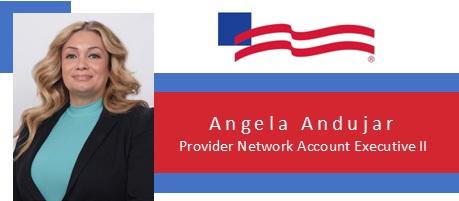
Angela Andujar
Provider Network Account Executive II Phone: 1-330-360-9607
aandujar@amerihealthcaritasoh.com
|
|
|---|
|
Building trust to strengthen well-child visits
The importance of well-child visits in pediatric care
Well-child visits serve as a fundamental component of pediatric care, providing health care providers with essential opportunities to monitor children’s growth and development, deliver preventive services, and foster trusted relationships with families.
These visits are particularly significant for addressing disparities in preventive care. For example, a 2020 study within a large health care system found that 71% of white children were up to date with their well-child visits, compared to only 64% of Hispanic/Latino children and 59% of Black children.1 For Black/African American children, well-child visits also present critical moments to address disparities in timely immunizations and other preventive screenings. By prioritizing culturally responsive communication and patient-centered care, providers can help improve adherence to recommended visits, reduce health inequities, and support healthier futures.2
Challenges and barriers to preventive care
Preventive care in childhood is essential for encouraging healthy growth, facilitating early screenings, and ensuring children receive timely immunizations consistent with national recommendations.3 Yet, racial and ethnic disparities in preventive care persist. Black/African American children are less likely to be fully immunized by age two, compared with their white and Latino peers.4,5 This gap may be caused by mistrust of the healthcare system, transportation issues, and scheduling problems, which can lead not only to vaccine delays but also to missed well-child visits.6 Each visit becomes more than just a routine checkup. It is an opportunity for providers to build trust, address family concerns, and equip parents with the information needed to support their child’s health.7
Five strategies for building trust and strengthening well-child visits
- Review care gaps by race and ethnicity. Examine your practice data by race and ethnicity to identify missed visits, incomplete vaccinations, or other disparities. Pay particular attention to vaccines, such as DTaP and flu, as these often reflect broader gaps in preventive care.5
- Acknowledge mistrust. Recognize that families may have concerns rooted in historical and ongoing inequalities. Responding with empathy and clear explanations can help build trust.8
- Connect preventive care to family priorities. Go beyond simply saying vaccines are “safe and effective.” Frame the benefits in ways that resonate with parents. For example, “This helps keep your child healthy, in school, and protected from serious illnesses.”7
- Address practical barriers. Engage families in conversations about challenges they encounter with transportation, time off work, or scheduling. Providing solutions such as flexible hours, reminders, and connections to ride assistance programs can make a significant impact.6
- Create space for open dialogue. Encourage questions and listen closely to family concerns about vaccines, nutrition, or development. Dialogue, instead of one-way information, helps build confidence and makes guidance more meaningful.7
Well-child visits provide essential opportunities to build trust, overcome barriers, and fill care gaps. By communicating clearly and remaining attentive to the unique challenges faced by Black/African American families, providers can help ensure every child has the chance to grow up healthy and supported.
References
- Amanda Luff, et al., “Attendance patterns in well-child visits across diverse pediatric populations, Midwestern United States,”
Preventive Medicine Reports, Vol. 54, Article 103082, June 2025, https://doi.org/10.1016/j.pmedr.2025.103082, accessed February 13, 2026.
- Joseph F. Hagan, Jr., et al. (Eds.),
Bright Futures: Guidelines for Health Supervision of Infants, Children, and Adolescents (4th ed.), American Academy of Pediatrics, 2017.
- Centers for Disease Control and Prevention. (2026).
Child and Adolescent Immunization Schedules. https://www.cdc.gov/vaccines/imz-schedules/child-easyread.html, accessed February 16, 2026.
- Cierra Buckman, et al., “The influence of local political trends on childhood vaccine completion in North Carolina,”
Social Science & Medicine, Vol. 260, Article 113187, September 2020, https://doi.org/10.1016/j.socscimed.2020.113187, accessed February 13, 2026.
- Trisha C. Parker, et al., “Rotavirus vaccination rate disparities seen among infants with acute gastroenteritis in Georgia,”
Ethnicity & Health, Vol. 22
, No. 6, pp. 585–595, October 14, 2016, https://www.tandfonline.com/doi/full/10.1080/13557858.2016.1244744, accessed February 13, 2026.
- Lavanya Vasudevan, et al., “Vaccine hesitancy in North Carolina: The elephant in the room?”
North Carolina Medical Journal, Vol. 82
, No. 2, pp. 130–137, March 1, 2021, https://doi.org/10.18043/ncm.82.2.130.
- Monica Schoch-Spana, et al., “The public’s role in COVID-19 vaccination: Human-centered recommendations to enhance vaccine acceptance, uptake, and equity,”
Vaccine, Vol. 39
; No. 40, pp. 6004–6012, September 24, 2021, https://doi.org/10.1016/j.vaccine.2021.09.012, accessed February 13, 2026.
- Giselle Corbie-Smith, “Vaccine hesitancy is a scapegoat for structural racism,”
JAMA Health Forum, Vol. 2
; No. 3, Article e210434, March 25, 2021, https://doi.org/10.1001/jamahealthforum.2021.0434, accessed February 13, 2026.
|
|
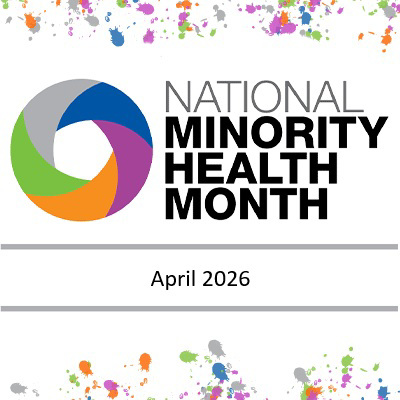
Observed every year in April, National Minority Health Month focuses on strengthening efforts to reduce health disparities among racial and ethnic minority populations. It promotes awareness of the disproportionate burden of disease and premature death in these communities while encouraging equitable access to quality healthcare, particularly primary and family care.
The origin of National Minority Health Month was the 1915 establishment of National Negro Health Week by Booker T. Washington.
|
|
|
|
|
| |
| | |
|
|  |
|
|
|
|
|